
Date: Sunday June 3–Tuesday June 5, 2057
Primary Locations: Mortuary Temple of Hatshepsut → Hidden Temple of Hathor → High House → Alexandria Research Institute
Session Overview

Session Twenty begins under old stone, with the party still inside the Mortuary Temple of Hatshepsut and Tariq mentally exhausted from his first true descent into True Name magic.
The knowledge is dangerous immediately. Tariq has deciphered the core of his own base True Name, enough to understand how terrifyingly vulnerable that knowledge makes him. Every additional piece would make control easier. Every name is a door. The Master has already used pieces of those doors, but the party realizes the gravest danger will come if he gains his own physical form.
Because apparently the only thing worse than a bodiless ancient tyrant is one with legs.
The exploration continues. The party identifies the “Scale” reference in the Scraphite records as a careful, indirect mark for the deity or power tied to the Master, something serpent-like, draconic, and deliberately unnamed. They follow Rana’s earlier mapping to the Hathor shrine, where Rana and Michael are touched by a divine presence and granted a final conversation with Naomi Brooks.
Naomi is at peace. She does not blame Yusuf. She does not blame anyone. She asks only that her family be cared for. She confirms that the Master is the former ruler of Earth.
That answer does not make the situation better. It does make it clearer.
The party’s work at Hatshepsut becomes a second funeral journey for Naomi. Anubis receives acknowledgment. Michael restores the Anubis shrine with David’s ritual support. Hathor asks for a follower, and when Amira Haddad is brought to the shrine, the divine mechanism responds. Amira vanishes, returns as Hathor’s priestess, and opens the hidden Temple of Hathor beneath Luxor.
By Monday, the party returns to Alexandria, bringing allies, grief, and another temple connection with them. Tariq reunites with his sister Soraya Mansour and brings her under the High House’s protection. World leaders from the United States, Russia, and China publicly de-escalate after Gansu, explicitly echoing Rana’s plea that they do better. David speaks with the British government and learns that awakened antiquities are no longer only Egypt’s problem.
Then Tuesday brings the boardroom back.
David successfully moves to exclude attackers from board meetings, forcing Luca out. Tariq’s Arcane and Artifact Oversight structure passes, giving David, Tariq, and Layla formal roles inside the Thoth Network. Luca still drains the party from outside the chamber and reflects Rana’s attack back onto her, proving that legal victory is not the same thing as safety. Humanity keeps needing this lesson. It refuses to retain it.
The critical battle comes with agenda item 5: executive committee authority. Sawiris argues for emergency power. Rana argues against concentrating authority in a compromised system. Blackstone warns that the legal categories are too broad.
Yusuf is under suggestion. Tariq frees him.
The vote fails by one. The Master does not get the emergency authority he wanted.
The boardroom survives another day.
The Story So Far
Session Nineteen ended inside the Mortuary Temple of Hatshepsut. Naomi Brooks had died from the delayed consequences of being forced into the nuclear sabotage. The Veil had buried her. The party had entered Hatshepsut, found the chamber of the Blade of Authority and the Belt of Giants, and confirmed through the Scraphite that the plane passenger list was deliberate.
The chosen bloodlines were tied to the Master.
The party also learned that Hatshepsut is not simply a ruin, but a living map of bloodlines, leylines, cult paths, and hidden power. Session Twenty begins with that map still open under their feet.
Major Events & Key Moments
1. True Names and the Shape of the Master’s Threat
The session opens with Tariq still deep inside the consequences of the Scraphite.
He has deciphered the core of his own base True Name. Not every layer. Not every scar, choice, title, or addition that life has written onto him. But enough. Enough to understand the danger. If someone knows the core, every other piece becomes easier to find. And with enough pieces, control becomes nearly absolute.
That realization reframes the Master’s power.
The Master has already exerted control through True Name magic. But Tariq now believes the greatest danger will come when the Master is fully present in his own form. Not using Sawiris. Not moving through Luca. Not scattered through bloodlines and broken vessels.
Present. Embodied. Capable of naming them properly.
The party is standing in an ancient temple, surrounded by bloodline records, and realizes the villain has been working with identity itself as a weapon. Very healthy hobby. Strongly recommend stamp collecting instead.
2. Scale, Serpents, and the Name No One Says
The party turns to the word “scale” in the bloodline records.
At first, Tariq questions whether it might mean weights and measures, distance, size, serpent scale, or dragon scale. The answer lands in the most ominous possible direction, because of course it does.
“Scale” appears to be a deity-type reference. In modern archaeology, it has been explained away in multiple directions, including fringe theories about serpent people, lizard men, mistranslations, or merchant gods. But the hidden history now visible to the party points elsewhere. “Scale” is a careful reference to a deity or power that people were afraid to name directly.
The party connects it to serpent and draconic imagery, especially in Egyptian and Babylonian myth. They also recognize the importance of indirect names. In True Name magic, saying the wrong thing too directly gives power away. The old priests knew that. The records do not name the thing.
They point around it. The “Scale” connection is the mark tying the party’s bloodlines to the Master.
Rana’s review of the list also finds a repeating gap: several “Scale”-linked bloodlines have unknown female lines. The pattern is not solved, but it is noticed. Sawiris and Luca’s family lines may also be somewhere in the same structure. The party has not found the whole genealogy.
They have found enough to be worried about the genealogy, which is worse.
3. Hathor and the Farewell to Naomi
Rana leads the party through the areas she found earlier, beginning with the Hathor shrine on the south end of the middle terrace.
The place is beautiful in the way ancient sacred architecture becomes terrifying once everyone realizes it actually works. The carving is precise enough that the deity’s face could be recognized elsewhere. The funerary meaning of the site is now clear because of the postcognitive visions from the previous session.
Michael carries the Staff of Ra. It begins to glow, which is inconvenient at night in a restricted archaeological site. Michael turns invisible, because even sacred restoration apparently benefits from basic stealth. When Rana and Michael enter, a presence touches their minds.
It is not invasive. They allow it.
The first image is Naomi Brooks lying in state upon a boat, passing along a river. The presence asks them to find someone who will accept Hathor’s faith and bring that person here. When they accept the responsibility, they are granted a final conversation with Naomi.
Michael spends a hero point to draw the rest of the party into the moment.
Yusuf falls to his knees and apologizes. Naomi does not blame him. She does not blame any of them.
She is at peace, and the relief of no longer being fused with metal is part of that peace. She asks only that her family be looked after. She is protected from the Master. Tariq asks whether she can tell them anything about him.
Naomi answers: He is the former ruler of Earth.
Then she continues toward the Field of Reeds, toward warmth and sunshine.
The party receives closure, but not comfort. Not really. Because closure with a dead friend and confirmation that your enemy used to rule Earth is a very uneven emotional trade.
4. Anubis and the Second Funeral Path
The party crosses to the Anubis shrine.
There, all of them feel compelled to give acknowledgment. They understand that this is part of Naomi’s passage, a funerary step as her soul moves onward. Anubis is recognized as guardian of the dead, master of mummification, and protector of souls during their journey.
Tariq understands this as the god behind his instinct to place coins on urns. The gesture remains Egyptian in meaning, not Greek, even if the cultures have overlapped and borrowed from each other like humanity always does when near boats and trade routes.
Then danger sense flares.
Tariq, Michael, and Yusuf all feel watched. Michael experiences it as a failed attempt to locate or pinpoint him. Tariq and Yusuf recognize the feeling as something like drone surveillance, but magical. David and Tariq conclude that someone is scrying from elsewhere. Not present. Not nearby. Searching. The sensation fades after about a minute.
The party then learns more from the shrine itself. Egyptian reverence for the dead was not merely symbolic. Bodies were prepared and protected for a reason. The paths through mortuary spaces were not just ceremonial routes. They were instructions, protections, and channels. If the dead were not properly prepared, horrible things could follow.
The party is no longer exploring a tomb. They are standing inside a defense system for the dead.
5. Michael Restores Anubis
At the Anubis shrine, Michael chooses to make an offering.

He has seen Naomi protected. He has seen some justice in the world, or at least something close enough to pass for it in dim light. He presents the Staff of Ra before the shrine and begins restoring it.
David joins him, using the ritual knowledge gained from the Temple of the Unseen Sun. Together; they shape the act into something repeatable. Not just raw power. A rite.
The restoration takes three hours, and it succeeds. The shrine is restored much as the Temple of the Unseen Sun was restored, though on a smaller scale. More importantly, David and Michael learn how to make future restorations more efficient: one charge from the Staff of Ra instead of all charges, and one hour instead of three.
Michael wanted to give thanks. He accidentally helped invent a sacred maintenance protocol.
6. Amira Haddad and the Hidden Temple of Hathor
While David and Michael work, Rana and Tariq return to the Veil to gather allies from the flight: Amira Haddad, Isabella Rossi, Layla Karim, and Mei Lin. They return to Hatshepsut after midnight. Amira begins moving toward the Hathor shrine, following the pull of the place. Tariq and Yusuf’s duplicate accompany her. As she approaches, the leylines react to her presence and she follows them naturally. Then there is a flash. Amira disappears along with the shrine.
The space remains, but the shrine appears as if it was never there. The party understands this not as destruction, but as something stranger. Time, removal, divine mechanism, pick your nightmare category, because apparently archaeology now needs several.
Rana handles the security response before it escalates. Guards approach with riot shields, calling out through a loudspeaker, asking if anyone needs help and whether it is safe to approach. Rana makes herself visible, descending the ramp calmly and reassures them. Once the lead guard recognizes her, he stops being procedural and becomes reverent. He calls her a hero to the people. Rana tells them everyone is safe and asks them to stay clear for their own safety. They obey without fear, giving her a contact number and radio frequency.

When she returns, Amira is back. She wears priestess regalia and the Menat necklace of Hathor. The shrine has returned, restored and renewed. Rana understands that the task is complete. Naomi has received her eternal reward and is protected by Hathor and Anubis.
Then Amira reveals the passage. The hidden Temple of Hathor lies beneath Luxor, connected to Hatshepsut by a long buried route. The party spends the rest of the night clearing the tunnel and uncovering the old temple complex. It is not fully restored. It is not fully understood. But it exists. Amira remains behind to begin the work of understanding her new priesthood.
Another hidden temple is awake.

7. Return to the High House
By 5 AM on Monday, the party is exhausted.
They return to Alexandria, bringing Mei Lin, Isabella, and Layla back to the High House. Amira remains behind at the Hathor temple.
The High House receives them like civilization remembered its manners: air conditioning, clean clothes, good coffee, breakfast, and enough comfort to make the previous night’s divine archaeology feel slightly less insane.
Rana performs the Alignment of Purpose before rest. David and Michael confirm that the Anubis restoration ritual has worked and can be repeated more efficiently. The group sleeps for about six hours. For Tariq especially, the rest matters. After True Name work, temple exploration, divine encounters, and another all-night crisis, sleep finally feels welcome. The Pharaoh discovers the luxury of unconsciousness, quite possibly a historic moment.
8. Soraya Mansour Comes Home
When the party wakes around noon Monday, Tariq contacts his sister Soraya in Cairo.
She has not found Ahmed Farouk, but she has found rumors. Artists, musicians, and hangers-on are whispering about a dark body marketplace in Cairo. Mortuaries and funeral homes may be selling bodies out the back. She has also found reports of unidentified bodies registered at hospitals around the relevant time, but cannot get access to them. The search for Ahmed Farouk becomes messier.
Tariq asks her to come to Alexandria. David teleports Tariq and Yusuf to Spatial Garden Estate in Cairo to retrieve her. Soraya Mansour greets Tariq with a hug and explains what happened after she fled. She used Tariq’s name at the British Embassy and was believed. British agents placed her on a private jet with a message: Pembroke sends his best. That is likely the party’s first confirmation that Pembroke made it home.
Tariq tells Soraya Mansour about the Master, the shared bloodline danger, and the likelihood that she has powers. Once at the High House, she confirms she does. Her abilities are not at the party’s level, but she is tougher than normal, resistant to knives, capable of short bursts of speed, and recovers better than ordinary people. Tariq makes her a resident of the High House, with papers, access, funds, and support through Nadine.
9. The World Tries Not to End
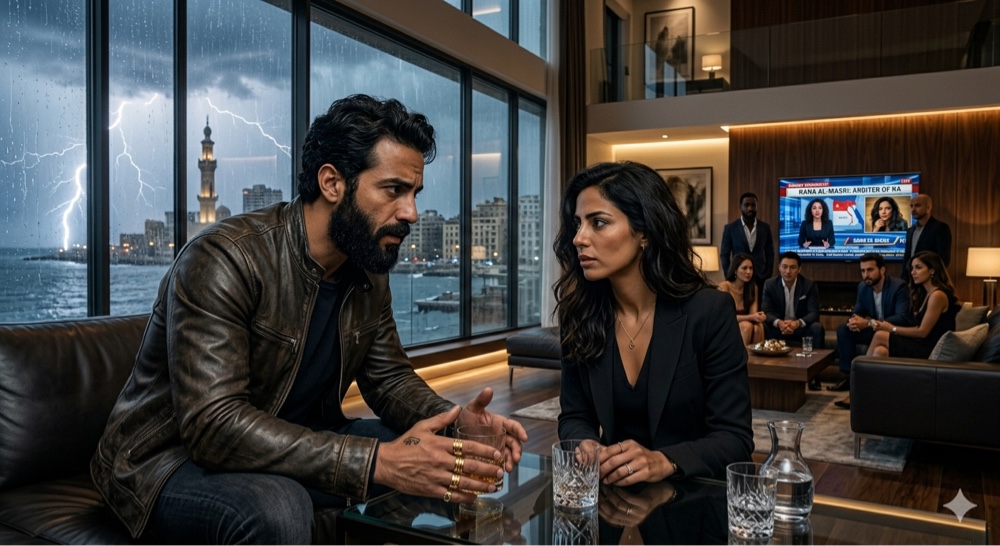
Later Monday, the world watches three speeches at once.
The President of the United States, the President of Russia, and the Premier of China all approach their podiums at nearly the same time. Each begins with the same basic message:
The other two nations are not our enemy. The world seems to exhale.
The leaders explain, in their own ways, that after Gansu, the expected opportunistic strike never came. The United States did not attack China or Russia while they were weakened. No more bombs fell. Aid flowed. Economic warfare did not begin.
Each leader states that they will find the real enemy behind Gansu. Then each invokes the advice of a wise woman from Egypt, who asked them to do better.
Rana’s plea has reached the highest levels of global response. Not as branding. Not as corporate strategy. A moral language at the edge of nuclear war and for once, the powerful choose de-escalation. No one should get used to it, but it happens.
10. British Awakenings
David calls the British government using the number he received from the Prime Minister’s office. Malcolm Grant answers. David offers financial support for aid into China, wanting to act through Britain. Malcolm says the situation is surprisingly cooperative. Aid is moving. Radiation levels are reportedly lower than expected. The United States has sent vast amounts of food into China. For once, Malcolm says, things appear to be taken care of.
David then asks about awakened British antiquities.
Malcolm confirms that many things are awakening. He warns David not to go to Stonehenge. David asks about Excalibur, and Malcolm confirms there are reports. He then says the greater issue is the Crowley problem. Because naturally Britain’s occult crisis includes Crowley. The island saw a magical apocalypse and immediately reached for its most embarrassing file folder.
Before ending the call, Malcolm asks whether David can be trusted with information. David says yes. Malcolm says he thinks the crown is going to go for it. Then he hangs up.
The sentence remains there, doing absolutely nothing helpful except vibrating ominously.
11. Dinner Before the Boardroom
At dinner, the party prepares for the next board session.
Rana raises the Luca problem directly. Luca has attacked board members repeatedly through his drain. He is not a board member. If the Institute had been the target of nuclear attack while the party was drained, his actions could have prevented them from saving people. Legally and morally, she argues, he should not be allowed inside the boardroom.
David considers the issue carefully. Removing Luca might also remove an outlet for Sawiris or change how the Master manifests. Tariq believes Sawiris may shift toward shielding the party’s minds rather than absorbing the Fortitude drain. Rana makes her position clear: the party has been bullied for days, and if Luca attacks her again, she may attack back.
The discussion is interrupted by a local news alert. A soccer stadium in Alexandria has suffered a mass casualty event, initially framed as a gas leak. About fifty people died during an academy practice. There is no explosion, no obvious impact, and the victims seem to have dropped all at once with gray skin and horrible expressions. The party investigates remotely, but not enough is known. They choose rest.
12. Tuesday Morning — Diligence Again
The party wakes early Tuesday.
Soraya Mansour is not a morning person. This is understandable, because she is not yet fully conditioned to the group’s deranged schedule of “wake before dawn, invoke virtues, then go argue with possessed billionaires.”
The morning rituals begin. Tariq again invokes diligence as the guiding virtue and spends a hero point to inspire everyone. Rana’s Alignment of Purpose recognizes Hathor and Naomi’s safe passage to the Field of Reeds, protected from the Master.
The ritual succeeds.
The party drives to the Alexandria Research Institute rather than teleporting. The city looks more alive. People are venturing out again after the joint speeches. Security at the Institute has increased, and the screening process now includes hidden anti-coercion checks. David is randomly selected for extra review, but the questions are designed to give him a chance to silently alert them if something is wrong. The Institute is slowly learning which is still better than most institutions, so credit where it is tragically due.
13. Naomi’s Flash Drive
Rana and David visit Dr. Mirela Kovács before the meeting. Kovács greets them by asking where the gurney is, smiling with the hope that Naomi may have returned alive. When she realizes that has not happened, her mood falls. David explains why he took Naomi from her care. Rana explains that Naomi’s cybernetic complications made resurrection or repair unsafe. They are doctors, not engineers, and Naomi’s condition was not something they could safely undo.
Then Rana tells Kovács that she spoke with Naomi’s spirit. Naomi reached the afterlife.She is not in torment.
Kovács is visibly shaken. Resurrection could perhaps be folded into medicine by someone determined enough to keep their worldview intact. Speaking with the dead is harder to file under “advanced trauma intervention.” She gives Rana Naomi’s flash drive.
Naomi is gone. But what she left behind is not.
14. New Board Candidates
In the boardroom, two new temporary board candidates are introduced.
Phi Moresaw is male, an Indian international banker recommended by Mei Lin. Glau Zoeff is a female international banker of German nationality introduced by Sawiris. Both bankers have purchased enough stock to qualify for consideration and may enter a temporary six-month status before possible full board approval.
Rana examines them carefully with true sight, aura reading, and analytical perception. Neither is under control. Both are storm-touched. Glau Zoeff appears especially powerful. Phi Moresaw is less developed, with what appears to be a minor stretching ability that he has not yet fully explored.
Four additional lawyers also appear remotely for other board members. Michael is ready for this and protects them the same way he protected prior legal counsel: delays, timing, and disconnections to prevent the visual influence from taking hold.
Amira is absent having given Rana her proxy. The board is expanding. So is the battlefield.
15. Luca Leaves the Room
Sawiris, Blackstone, and Luca enter together.
Luca looks better than he has in days. Less swollen. Less monstrous. More human.
More menacing.
The Will effect hits. Rana, David, and Tariq pass, spending hero points as needed. Yusuf fails, even after using Naomi’s lock of hair for a reroll. His eyes glaze over. Once again, he becomes agreeable toward Sawiris.
There is no Fortitude drain.
After introductions, David moves before returning to agenda business. He introduces an addendum: anyone who attacks board members, physically or through powers, is disqualified from presence during board meetings. A hush falls.
Luca stands, glares across the room, and walks out. Sawiris sweats.

David continues as if the motion could apply to anyone. Physical might, energy manipulation, and other powers all count. The company will not be bullied. The motion passes and the boardroom changes
16. Arcane and Artifact Oversight
David returns to agenda item 10: Arcane and Artifact Oversight.
Tariq presents a refined structure. The Thoth Network should create an Internal Liaison Authority for international board policy coordination and intelligence gathering across jurisdictions. David Hassan is proposed as inaugural International Liaison, based on his military background, education, geopolitical knowledge, arcane expertise, and fluency in all known languages.
Then Tariq proposes splitting the Arcane and Artifact Oversight Division into two offices.
The Arcane and Magic Oversight Office would be directed by David Hassan.
The Artifact and Relic Oversight Office would be directed by Tariq Mansour.
Blackstone questions the structure for about an hour. The lawyers question it for another. Tariq is already CFO, so concerns arise about workload and authority. Tariq names Layla Karim as his first officer for the artifact side, which calms the room. Layla’s archaeological expertise, storm-touched experience, and relic connection make her a natural fit.
The proposal does not pass immediately. First it survives law.
7. Luca at the Door
Lunch passes quietly, too quietly, because apparently no one in this campaign has earned a normal sandwich. When the board returns, Luca is not waiting where expected. Instead, he steps out from inside the boardroom as the doors open. Sawiris is already seated inside, pale.
The Fortitude drain hits. Everyone resists, but resistance does not mean immunity. A successful save still drains six power levels.
Rana responds immediately. She blasts Luca with a biochemical shockwave. The attack strikes his hardened exterior and reflects back onto her. She is injured by her own power. Yusuf blasts the floor under Luca’s feet, trying to disrupt him. Luca avoids it and turns back long enough to warn them:
They may survive him. Not everyone there will.
Tariq draws a gun and tells Luca they would all appreciate it if he would not be there. Luca ignores him and leaves. The message is clear. The board may have excluded Luca from the meeting but Luca has not been removed from the war.
18. Sawiris Holds the Line
Inside the boardroom, Sawiris is pale and sweating.
The party realizes he is concentrating, using everything he has to keep the Master from noticing or surfacing. He is not with them in any normal sense. He is holding a door shut inside himself.
Rana scans the room. Yusuf, Mei Lin, Isabella Rossi, and Blackstone’s lawyer are under suggestion. Blackstone remains unaffected.
Michael spends a hero point to help Sawiris, using the memory of family and virtue to steady him. Sawiris visibly relaxes. The party gains insight into what Sawiris is doing: he is avoiding rage, fear, and strong negative emotion because those emotions may draw the Master’s direct attention. The Master attacks desire. The Master also follows rage.
Virtue is no longer just moral language. It is operational security.
19. Yusuf Is Freed
Tariq moves carefully. With Sawiris distracted by the effort of keeping the Master away, Tariq attempts to counter the suggestion on Yusuf. Rana boosts Yusuf’s Wisdom as much as she can while drained. Yusuf pushes through with extra effort and breaks free. The timing matters. The next vote is not decorative. It is agenda item 5, the executive committee authority that could concentrate control inside a compromised structure.
If Yusuf remains charmed and agreeable, the vote likely passes. If Yusuf is free, the party has a chance. This is what victory looks like in the boardroom: one friend quietly regaining his own will before someone says “all in favor.”
20. Item 10 Passes
David calls the vote on agenda item 10. The board approves the addendums, confirms Layla, accepts the split between arcane and artifact offices, and formally adopts the structure.
The Thoth Network now has an institutional framework for magic, relics, artifacts, and international liaison work. David, Tariq, and Layla are no longer merely people with expertise.
They are part of the company’s formal machinery. Terrifying, yes. But also useful. The human condition, summarized. The vote lands around the normal break time, but the board votes to continue. The party chooses to move to the dangerous item while they still have the numbers.
21. Executive Committee Authority
David calls agenda item 5: executive committee authority.
Sawiris asks to speak last.
Rana speaks against the proposal. Given the company’s global importance and the abilities of the board members, she argues that concentrating power in a small committee is irresponsible. If such authority exists at all, she says, every executive committee member should be present, the vote should be unanimous, and any board member who appears should vote with equal weight.
Blackstone speaks next. He is undecided, but he identifies the legal problem: the terms are too broad. “Global instability,” “infrastructure threats,” and “supernatural events” are not properly defined. Before anything like this could be safely created, those terms would need legal boundaries.
Sawiris speaks in favor. He argues that the company must be able to act quickly in crisis. If board members die, if nuclear threats affect company holdings, if supernatural events threaten lives or infrastructure, the company cannot wait for slow procedure. He wants guardrails, not paralysis.
The argument is coherent. That is the problem. Under ordinary circumstances, much of it would make sense. But ordinary circumstances are dead in a ditch. Sawiris is compromised. The Master is near. Emergency authority in the wrong hands would not be efficiency.
It would be a loaded weapon.
22. The Vote That Almost Passed
David calls the vote. Mei Lin votes for executive committee authority.
Rana votes no. David votes no. Layla votes no. Yusuf, now free, votes no.
Tariq votes no. Rana casts Amira’s proxy as no.
Isabella Rossi votes yes. Marcus Blackstone votes yes.
Sawiris votes yes, and his vote counts twice.
Five in favor. Six against. The motion fails. Barely.
If Yusuf had remained controlled, it would have passed. If Amira had not given Rana her proxy, it would have passed. If Blackstone had leaned differently, it might have passed.
The Master loses by one vote. Not in a temple. Not in a battlefield. Not in a vision.
In a boardroom. With minutes, motions, proxies, and enough procedural nonsense to make evil briefly lose patience. Civilization finally does something useful with bureaucracy.
23. Adjournment
After the executive committee authority vote fails, David adjourns the meeting until Wednesday morning. The party understands what just happened. They won the most important board vote so far.
But Luca is still outside the room. The Master is still near. Sawiris is still fighting himself. Yusuf has been compromised more than once. New board members are entering. Global crises are multiplying. Naomi is dead. Gansu is burning. Britain has a Crowley problem. A soccer field in Alexandria has fifty unexplained dead.
And beneath Luxor, a hidden Temple of Hathor has opened. Naturally, the meeting continues tomorrow.
Character Spotlights
Rana Al-Masri
Rana carries the session’s moral and divine through line. She accepts Hathor’s
charge, speaks with Naomi’s spirit, reassures temple security without fear or
force, recognizes Amira’s transformation, performs the Alignment of Purpose
honoring Naomi’s safe passage, and argues forcefully against executive
committee authority. Her opposition to concentrated power is not abstract. It
is based on lived knowledge that the system is compromised.
Tariq Mansour
Tariq begins the session exhausted by True Name magic and ends it as one of the
architects of the company’s magical future. He helps identify the “scale”
connection, brings allies to Hatshepsut, retrieves and protects Soraya Mansour,
formally brings his sister into the High House, presents the Arcane and
Artifact Oversight structure, names Layla as first officer, and frees Yusuf
from control at the exact moment it matters most. The man is transforming, and
unfortunately for everyone else, he is also learning procedure.
David Hassan
David continues converting insight into structure. He helps Michael shape
restoration into a repeatable ritual, creates space for Naomi’s dignity with
Dr. Kovács, contacts Britain’s political and occult channels, proposes the rule
that forces Luca out of the boardroom, steers agenda item 10 into formal
adoption, and calls the executive authority vote. David is becoming the
campaign’s proof that procedure is not boring when the alternative is ancient
tyranny with a quorum.
Yusuf Khalid
Yusuf receives the most personal gift of the session: Naomi’s forgiveness. Her
spirit releases him from blame, and her lock of hair becomes a daily reroll
token. He is later controlled again in the boardroom, fails even with that
token, and must be freed by Tariq and Rana before the executive vote. His “no”
becomes decisive. Yusuf’s agency is attacked repeatedly, but the session ends
with his restored will changing the outcome.
Michael Adeyemi
Michael continues becoming the Archivist as restorer. He hides the Staff of
Ra’s glow, accepts Hathor’s charge, helps connect the party to Naomi’s spirit,
restores the Anubis shrine, refines restoration ritual work with David, resumes
Naomi’s AI project, and prepares Dr. Marcus Acousa as the contractor identity
that can carry the work forward. He also helps stabilize Sawiris at the board
meeting, using family and virtue as a weapon sharper than another blast of
fire. Irritatingly wholesome. Effective, though.
Amira Haddad
Amira becomes the major new evolving character of the session. Brought to
Hatshepsut as a board ally, she follows the pull of Hathor, vanishes with the
shrine, and returns transformed as Hathor’s priestess wearing the menat
necklace. Her acceptance opens the hidden Temple of Hathor beneath Luxor. She
remains there to begin understanding her faith and powers, moving from
concerned doctor to divine representative. Casual career pivot. Very normal.
Naomi Brooks
Naomi’s presence continues after death. Her spirit appears at the Hathor
shrine, forgives Yusuf, asks that her family be cared for, reveals that the
Master was the former ruler of Earth, and passes safely toward the Field of
Reeds. Her death remains central, but Session 20 gives her peace, protection,
and a final act of guidance.
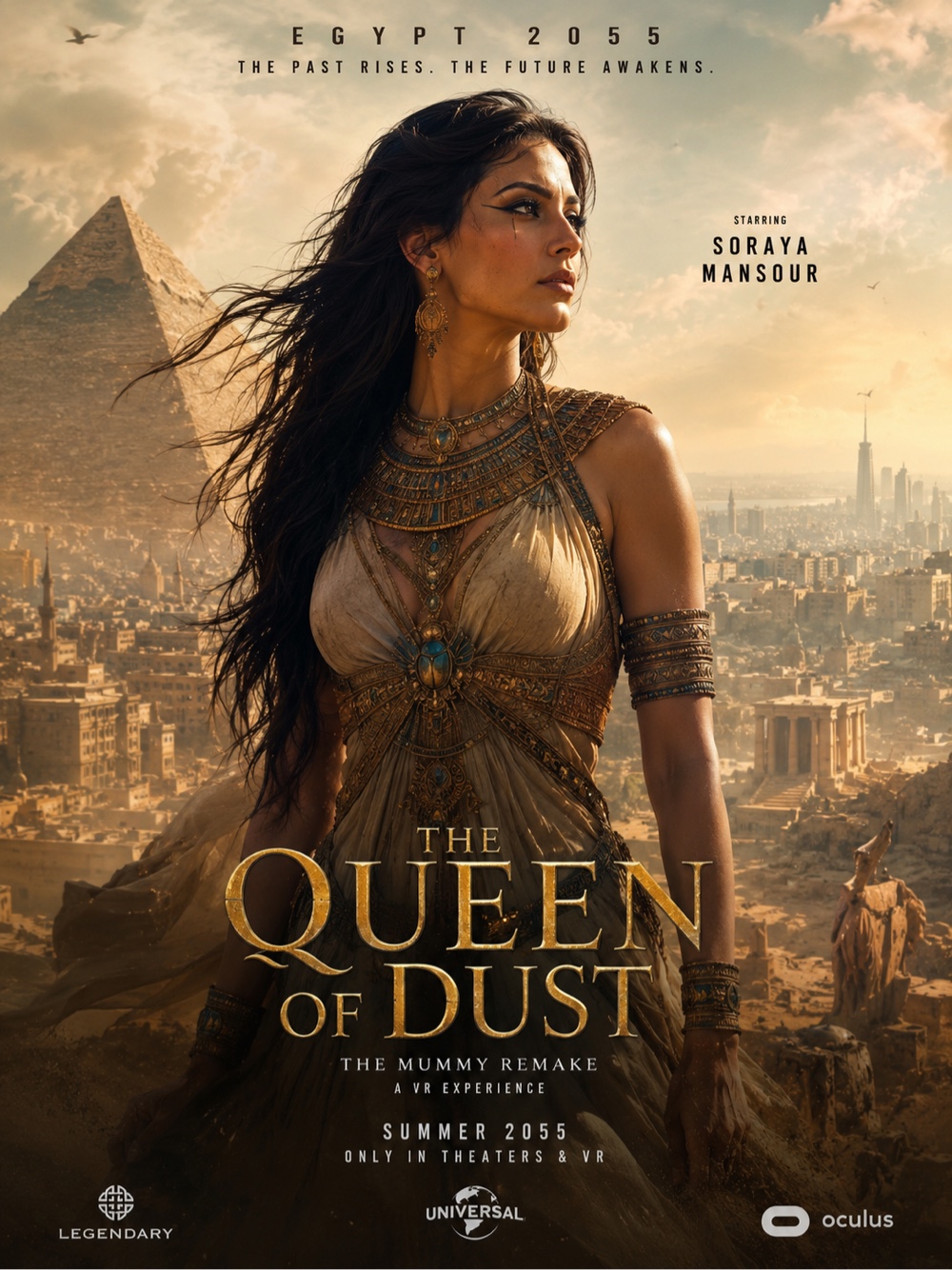
Soraya Mansour
Soraya Mansour enters the story directly. She survived through British aid,
returns to Tariq, reveals lower-level storm-touched defensive powers, and
becomes a resident of the High House. Her arrival gives Tariq a personal stake
beyond company and crown, because apparently family trauma was feeling left out
of the apocalypse.
Marcus Blackstone
Blackstone remains terrifyingly useful. He questions Tariq’s proposal hard
enough to make it legally viable, identifies the dangerous vagueness in
executive committee authority, and refuses to simply rubber-stamp Sawiris’
preferred structure. He votes for the executive committee, but his objections
help frame the danger clearly.
Luca
Luca becomes more dangerous by becoming more controlled. He looks less
monstrous and more human, but his menace grows. He leaves the boardroom when
David’s motion passes, then ambushes the party with a Fortitude drain as they
return from lunch. He reflects Rana’s attack and warns them that not everyone
present would survive if they push him. Legal removal does not equal
containment.
GM Notes & World Narrative
Session Twenty is about passage.
Naomi passes fully into the afterlife, protected by Hathor and Anubis. Amira passes from doctor to priestess. The party passes from discovery into stewardship, learning that shrines can be restored, hidden temples can be reopened, and ancient divine systems still respond to the right blood, faith, and action.
The Master’s identity sharpens again. Naomi names him as the former ruler of Earth. The Scraphite’s “scale” category confirms that the bloodline records are not only genealogical, but theological and political. They are references to powers too dangerous to name directly. Ancient priests encoded fear into bureaucracy, which frankly tracks.
The session also shows that modern institutions are becoming just as important as ancient temples. The boardroom fight over executive committee authority is not filler. It is one of the campaign’s clearest examples of systemic stakes. The Master does not need to win every fight. He only needs the right structure to pass once.
The failure of agenda item 5 is therefore enormous.
It prevents emergency authority from consolidating around Sawiris and Blackstone while Sawiris remains compromised. It preserves the full board’s relevance. It protects Rana, Tariq, and others from being made symbolic stakeholders while actual power moves elsewhere.
Meanwhile, the outside world keeps moving. The U.S., Russia, and China de-escalate publicly. Britain’s magical past is waking. Stonehenge is dangerous. Excalibur rumors are active. Crowley is a problem. A soccer field in Alexandria suffers a mass death. The Veil expands legally. The Hathor temple opens beneath Luxor. The campaign is no longer about whether ancient power has returned.
It is about who gets to build the rules around it before the former ruler of Earth finishes remembering how to rule.
Loot, Clues, & Reveals
Items Acquired
Naomi’s lock of hair becomes a token granting Yusuf one free daily reroll.
Amira receives Hathor’s Menat necklace and priestess regalia. The hidden Temple
of Hathor is opened beneath Luxor. The Anubis shrine is restored, and David and
Michael develop a more efficient restoration ritual requiring one staff charge
and one hour. Rana receives Naomi’s flash drive from Dr. Kovács. The Veil
acquisition expands to include three nearby properties.
Clues Found
Tariq has deciphered the core of his base True Name. The Master’s full True
Name danger becomes greatest when he has his own physical form. “Scale” in the
bloodline records is a careful reference to the power tied to the Master.
Several scale-linked bloodlines have unknown female lines. Naomi is protected
from the Master in the afterlife. Someone attempted magical scrying at
Hatshepsut. The dead in Egyptian funerary systems were protected for real
magical reasons. Amira is tied to Hathor. The hidden Hathor temple lies beneath
Luxor and connects to Hatshepsut through leyline passages. Soraya Mansour is
storm-touched. Britain’s awakened antiquities include Stonehenge danger,
Excalibur reports, and a Crowley problem. Luca can reflect Rana’s biochemical
attack. Sawiris avoids rage to keep the Master from surfacing.
Reveals or Twists
Naomi reveals that the Master is the former ruler of Earth. Amira becomes
Hathor’s priestess and opens the hidden Hathor temple. The U.S., Russia, and
China publicly de-escalate and echo Rana’s call to do better. Luca is
successfully removed from the boardroom but still drains the party from outside
it. Yusuf fails suggestion again but is freed before the executive committee
vote. Agenda item 10 passes, establishing formal arcane and artifact oversight.
Agenda item 5 fails by one vote, blocking executive committee authority.
Active Plot Threads
The Master as former ruler of Earth.
Tariq’s base True Name and the danger of further naming.
The “scale” bloodline category and its draconic or serpent-linked meaning.
Unknown female bloodlines in the Scraphite records.
Sawiris and Luca’s likely bloodline placement.
The hidden Temple of Hathor beneath Luxor.
Amira Haddad’s new role as priestess of Hathor.
Naomi’s family and final request.
The restored Anubis shrine and future restoration rituals.
The magical scryer searching for the party.
The soccer stadium mass casualty event in Alexandria.
Soraya Mansour’s powers and safety at the High House.
Ahmed Farouk’s possible body in Cairo’s black-market mortuary network.
Michael’s Dr. Marcus Acousa contractor identity.
Naomi’s AI project continuing under Michael.
The Veil property expansion.
British awakened antiquities, Stonehenge, Excalibur, and the Crowley problem.
Luca’s status outside the boardroom.
Sawiris’ emotional control and fear of drawing the Master.
The Arcane and Artifact Oversight structure.
The failed executive committee authority vote.
The board meeting continuing Wednesday.
Next Session Preview
Luca is outside the boardroom. That does not mean he is gone.
The executive committee failed by one vote. The Thoth Network now has an arcane structure. Amira stands beneath Luxor as Hathor’s priestess. Naomi is beyond the Master’s reach.
And somewhere in the old records, the former ruler of Earth still has names left to find.


